Kit budgeting for a grassroots committee: a practical guide
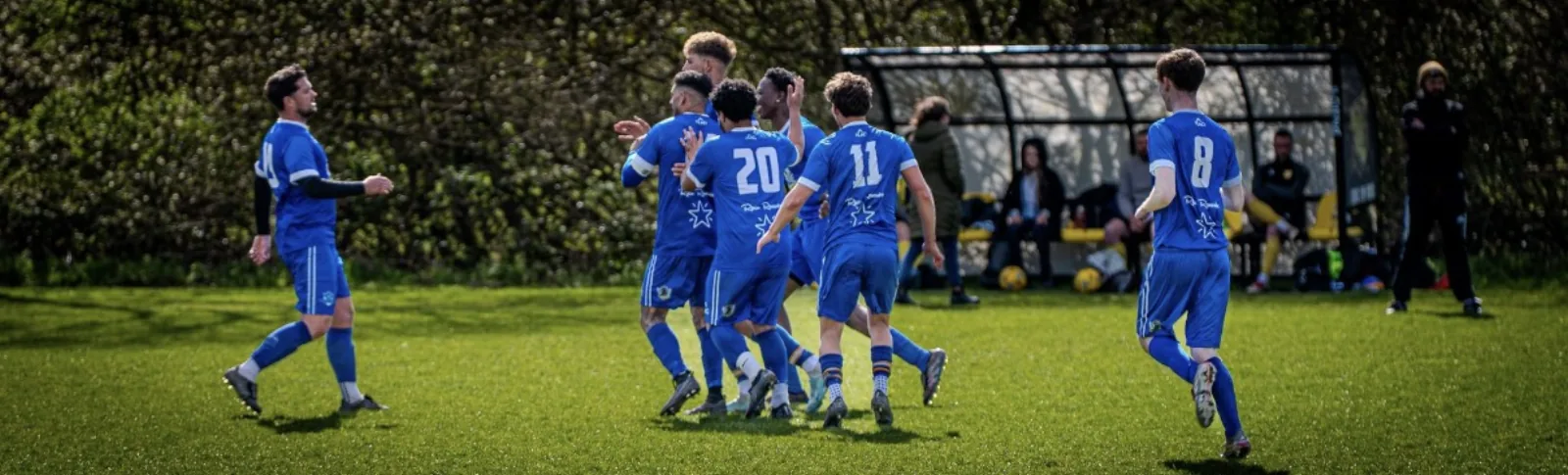
Most grassroots clubs end up with a kit that "just about works" because the budgeting happened in the last five minutes of the AGM. This is the conversation we wish more committees had three months earlier — what a custom kit actually costs, where the money usually comes from, and the line items most people forget.
What a Peaq kit actually costs
We list our prices openly because the answer rarely changes:
- £30 per player — full sublimated kit (shirt + shorts + socks) with crest and sponsor printed in.
- + £6 per player — silicone badge upgrade. The most common spec.
- + £12 per player — holographic upgrade. Premium finish.
- + £30 per player — a 1/4-zip training/matchday top in the same colourway.
For a 16-player squad on the most common build (silicone, full kit + matchday top), that's £36 + £30 = £66 per player, or about £1,056 all in. Free UK delivery on full-squad orders.
Where the money usually comes from
Shirt sponsorship — the underused option
A local sponsor on the front of the shirt typically brings in £200–£1,000 for a season, depending on the club's profile. For a grassroots Sunday side, £300–£500 from a local plumber, builder, café or pub is the common range. That alone covers a third to a half of a full kit.
Tip: write a one-page sponsor pack with squad size, fixture count, social-media reach (be honest), and the sponsor's logo placement options. Send it to ten local businesses, not one. Conversion rate is usually 10–20%.
Subs uplift, one-off
If subs are £4 a session and you play 30 sessions a season, that's £120 a player. Adding £40 to season-opening subs to cover a kit is rarely a sticking point — provided you tell people in May, not September.
Buy-your-own option
Some clubs let players opt into "premium" pieces (training top, polo, gilet) at cost. The match kit is funded centrally; the lifestyle pieces aren't. Keeps the per-player ask defensible.
Bake sale / auction night / pub quiz
Don't laugh. A reasonably-attended quiz night with £10 entry × 60 attendees + raffle = £700 in an evening. Three of those a season clears most kit budgets.
Hidden costs people forget
- Replacement shirts. A player will lose, rip or wash-something-red a shirt during the season. Budget for 2–3 single-piece replacements at ~£25 each.
- Goalkeeper reorder. If you only carry one keeper kit and your number two suddenly plays four games in March, you'll want a second.
- Mid-season signings. One or two players join after the kit run. Build a small contingency pot for top-up orders.
- Photography. Worth budgeting £100–£200 for one decent kit-launch photoshoot. Pays for itself in social engagement and next season's sponsor pitch.
Three sample budgets
Sunday League XI — 14 players, sublimation
- 14 × £30 full kit = £420
- 2 × £25 replacement shirt contingency = £50
- Total: £470
- Funding: 14 × £35 subs uplift = £490. Done.
Mid-table semi-pro — 22 players, silicone
- 22 × £36 full silicone kit = £792
- 22 × £30 matchday tops = £660
- 3 × £30 replacement contingency = £90
- Total: £1,542
- Funding: £500 shirt sponsor + 22 × £50 player ask = £1,600.
School first XI — 18 players, holographic
- 18 × £42 full holographic kit = £756
- 3 × £35 replacement contingency = £105
- Total: £861
- Funding: PTA budget + £200 from local club partnership.
The thing nobody mentions
The kit doesn't have to cost the same per player. Some clubs run a "subsidised" model where the player ask is £40 for everyone, and a small grant pot from sponsorship covers the difference for any player who'd otherwise drop out. Means the squad keeps everyone in the team photo, which is the actual point.
How to start
Get a real number first, then talk funding. The Peaq configurator gives you a live quote in under a minute — pieces, squad size, finish, add-ons. We don't take payment at that stage; it's a number you can take to the next committee meeting and stop guessing. For everything else that comes up in that meeting — finishes, sizing, lead times, reorders — the full custom football kit guide has the answers in one place.