Picking your football kit colours: a non-designer's guide
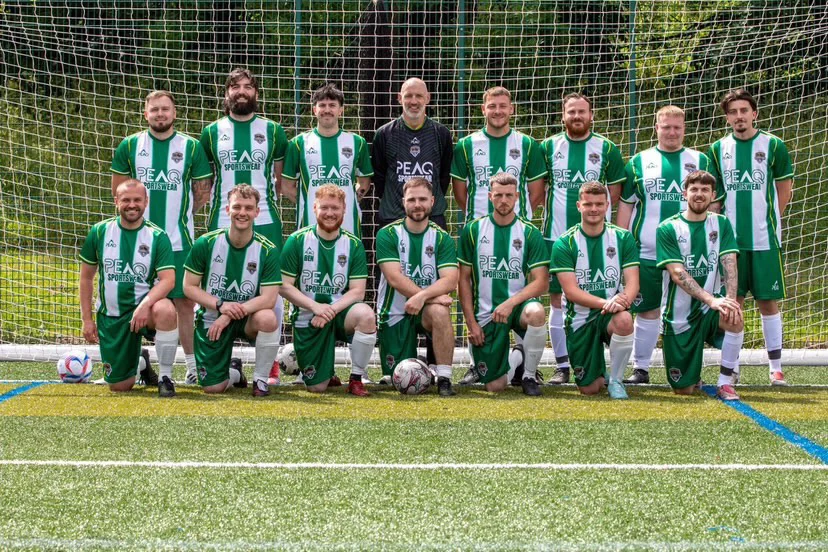
Most clubs come into a kit project knowing they want "blue" or "red and white", and commit somewhere in the first ten minutes of the AGM. This is the conversation we wish more committees had thought about for an extra fifteen minutes — what actually goes into a colour decision, and the practical traps that catch out clubs every season.
Start with what you can't change
Three constraints usually decide your colours before you do:
- Existing club identity — if you've been "the Blues" for a decade, that's not up for re-litigation in one meeting. Stick.
- Sponsor constraints — some sponsors won't pay for a logo that clashes with their brand. Worth checking before you commit.
- League restrictions — most amateur leagues require you to register a primary kit colour and avoid clashes with other registered teams. Check the league site.
Once those are out of the way, the actual creative space is smaller than you think. That's a feature, not a bug.
The two-colour rule
The cleanest grassroots kits are built around two dominant colours plus a small accent. Three colours is the sweet spot. Four starts to look busy. Five is where kits go wrong.
Pick a primary (the colour the shirt reads as from the touchline), a secondary (collar, sleeve cuff, side panel) and an accent (numbers, trim, sponsor outline).
Goalkeeper colour: don't pick this last
The single most common kit-colour regret we hear: "We picked the GK kit at the end and it clashes with three teams in our league." Lock the keeper colour at the same time as the outfield kit, not as an afterthought.
Practical rules:
- The GK kit must contrast both your home outfield kit AND the typical opposition kits in your league.
- If your home kit is dark (navy, black, dark green), pick a bright GK colour (yellow, orange, sky-blue).
- If your home kit is yellow or red, dark green or navy work well for the keeper.
- Pink, salmon and lime green are popular GK colours because they clash cleanly with most opposition kits — and look great on Instagram.
Full guide: Choosing a goalkeeper kit your number one will actually want to wear.
Print considerations
Two technical things to know:
Light shirts vs dark shirts
Sublimation works by dying polyester. White and light-coloured fabrics take dye cleanly. Very dark fabrics (especially black) can't be sublimated with a lighter design — the dye doesn't show. If your design has a white crest on a black shirt, you'll need a different process for the white element, which usually means swapping to silicone for that part of the design.
How sponsor logos read on different colours
A red sponsor logo on a red kit doesn't read. A black logo on a navy shirt is tricky. Get your sponsor's logo file in multiple colour variants (most have a white version, a black version, and a colour version) so you can pick whichever sits best on your kit.
Combinations that keep working
Season after season, the pairings that hold up are high-contrast two-tones. Six we'd put money on:
- Yellow / navy — maximum touchline visibility, photographs superbly.
- White / red — the classic for a reason; sponsor logos sit cleanly on both.
- Sky blue / navy — tonal but far enough apart to hold at distance.
- Amber / black — reads as a dark kit with real presence under floodlights.
- Emerald / white — distinctive in most leagues without being loud.
- Claret / sky — the heritage pairing; ages better than anything trendy.
And the fastest way to settle an argument at the AGM: our free kit colour tester shows any two of our 23 production colours on a real kit instantly — and tells you what the keeper should wear, whether the referee will object, and what your natural away colour is.
Photographing well
Two-tone kits with strong contrast photograph better than monochrome ones. If you plan to do a kit-launch shoot or run regular matchday social posts, lean toward higher contrast — yellow on navy, white on red, mint on charcoal — rather than tonal blends like sky-blue on royal-blue.
Ageing across seasons
If you order custom kit, you're committing to that look for at least two seasons (most clubs run kits 2–3 seasons before refreshing). Trends move; classics last. The kit you love in May 2026 might feel dated in September 2027.
Two practical heuristics:
- Avoid colour combinations that are currently on a Premier League kit. By the time yours arrives, that kit will be at the centre of every conversation in your league. Three seasons later it'll feel dated.
- Lean into your club's actual identity rather than chasing what's currently trendy. Your blue should look like your club, not Manchester City's.
If you're stuck
Good free reference: open Google Images, search "[your league name] team kits", and screenshot 10 examples. You'll quickly see the colour space your league occupies and what's already crowded. Then aim for the gap — and try the shortlist on the colour tester before anyone commits.
When you're ready, the configurator below lets you spec a quote without colours locked — we'll work through them with you in the design rounds.