Who actually pays for a grassroots football kit?
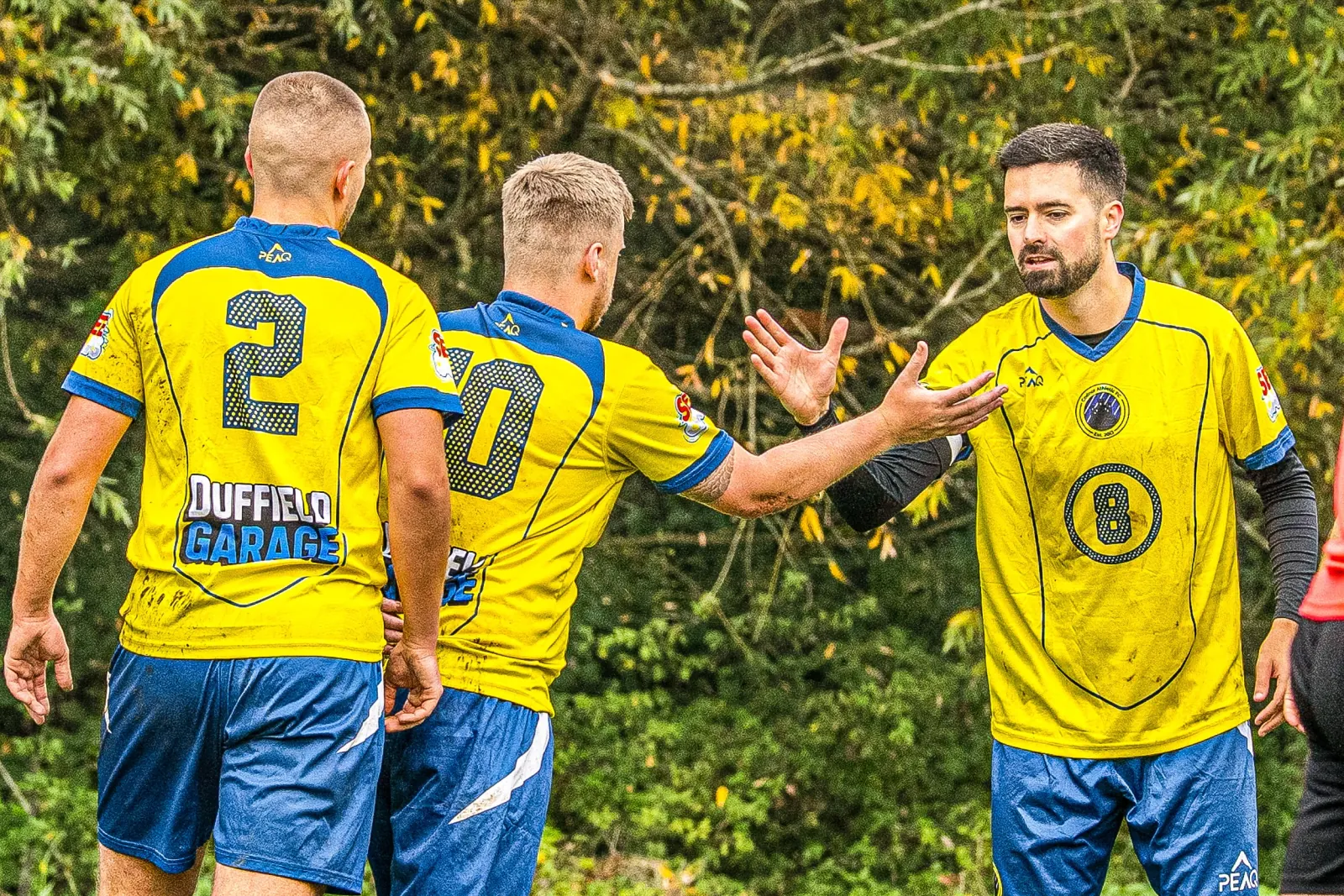
Nobody at a grassroots club has a kit budget. There's a bank account with a few hundred quid in it, a treasurer who checks it more often than he'd like, and a season starting in six weeks. The kit gets paid for one of four ways, and most clubs end up using two or three at once. Here's what each one actually raises.
The number you're trying to cover
Start with a real figure rather than a vague one. A full sublimated kit — shirt, shorts and socks, names and numbers included — is £30 a player with us. A 16-player squad is £480. Add a silicone badge package and it's £576. Add quarter-zip training tops for everyone and you're at £1,056.
That's the whole thing, not a deposit. Knowing the number lets you work backwards, and it's small enough that most clubs can cover it without a fundraiser. £480 across 16 players is £30 each — about what a lad spends on a night out he won't remember.
1. Subs
The simplest route and the one most clubs default to. You either add a one-off kit levy on top of match fees, or you build it into the season's subs and never mention it again.
The one-off levy is easier to explain but harder to collect — you'll be chasing three lads in November. Building it into subs works better: £3 a week over ten weeks covers a £30 kit without anyone noticing it leave their account. If your subs are already at the ceiling of what your players will pay, this is the wrong lever and you want a sponsor.
Realistic yield: the full amount, if your collection is good. Most clubs know exactly how good theirs is.
2. A local sponsor
The best option and the one clubs are shyest about. A local business puts its name on the shirt and covers some or all of the kit.
The mistake is asking for charity. You're not — you're selling advertising. Twenty players wearing that name every weekend, in front of the opposition, parents and whoever's walking the dog past the pitch, plus every team photo that goes on Facebook for the next two seasons. For a plumber, a builder or a takeaway working the same postcode as your ground, that's cheap and it's local, which is the only kind of advertising most of them actually want.
Go to businesses with a connection first: someone's employer, a player's own trade, the pub you drink in after the game. A warm ask converts far better than a cold letter to an estate agent who's never heard of you.
Be specific when you ask. "Would you sponsor the kit?" invites a no. "£300 puts your name on the front of twenty shirts for two seasons, and I'll send you the team photo for your Facebook page" is a proposition someone can say yes to.
Realistic yield: anywhere from a couple of hundred pounds to the whole kit. Two sponsors — one on the front, one on the back — is a common way to get there without leaning too hard on one business.
Worth knowing before you print anything: there are restrictions on what can appear on youth kit, and they change. Gambling and alcohol branding in particular is a minefield for under-18s teams. Check with your county FA before you commit to a sponsor for a junior side — it's a five-minute email that saves a reprint.
3. Club funds
If the club's had a good year on the bar, at the gate or through a summer tournament, the money's already there. The question isn't whether you can afford it, it's whether kit is the right thing to spend it on when the nets need replacing and the mower's on its last legs.
Our honest answer: kit is usually worth it, because it's the one purchase that every player and every parent sees every week. A new mower doesn't make anyone want to play for you. But it's a committee decision, and it should be made in a meeting rather than by whoever holds the card.
Realistic yield: whatever's in the account, minus what the trustees will actually release.
4. Grants
Less common for kit specifically, but worth knowing about. The Football Foundation and county FAs run funding schemes, and while most are aimed at facilities — changing rooms, pitches, fencing — some smaller pots cover equipment and kit, particularly for new teams, girls' and women's football, or clubs in areas targeted for growth.
The catch is time. Applications take weeks and often want match funding, constitutions and accounts. No use if your first fixture is a fortnight away. Worth starting now for next season rather than this one.
Realistic yield: variable, slow, and worth it if you're organised enough to plan a season ahead.
What most clubs actually do
In our experience the pattern is almost always the same: a sponsor covers most of it, subs cover the rest, and the club tops up the difference. A £576 kit becomes a £300 sponsor, £15 a head from sixteen players, and £36 from the club account. Nobody's out of pocket and nobody's chasing anyone in November.
The three splits we see most, on a 16-player squad:
| Who pays | Sublimated kit — £480 | Silicone kit — £576 |
|---|---|---|
| Sponsor-led (most common) | £300 sponsor · £11 a head · £4 club top-up | £300 sponsor · £15 a head · £36 club top-up |
| Subs only | £30 a head — £3 a week over ten weeks | £36 a head — £3.60 a week over ten weeks |
| Club and players 50/50 | £240 club · £15 a head | £288 club · £18 a head |
Two things that save clubs money
- Order a spare shirt. One extra costs very little at the point of order and saves you an entire reorder when a new player signs in October or someone loses theirs. Reorders on a run of one are always the expensive way to buy a shirt.
- Keep the artwork. If your supplier holds your design on file, next season's reorder skips the design rounds entirely. If they don't, you're paying to have the same kit designed twice. Ask before you commit.
When to start
Sponsorship conversations take longer than kit production does. If you want a sponsor's name on the shirt for the first game of the season, start asking now and design later — chasing a signature while the printer waits is how clubs end up playing the opening fixture in last year's kit.
If you know roughly what you need and want a number to take to a committee meeting or a sponsor, build the spec in the configurator and the price appears as you go. No email, no waiting. And if you're weighing up the whole decision, not just the money, the full custom football kit guide covers finishes, sizing, lead times and reorders in one place.