Kitting a team that isn't in a league: Snakes United
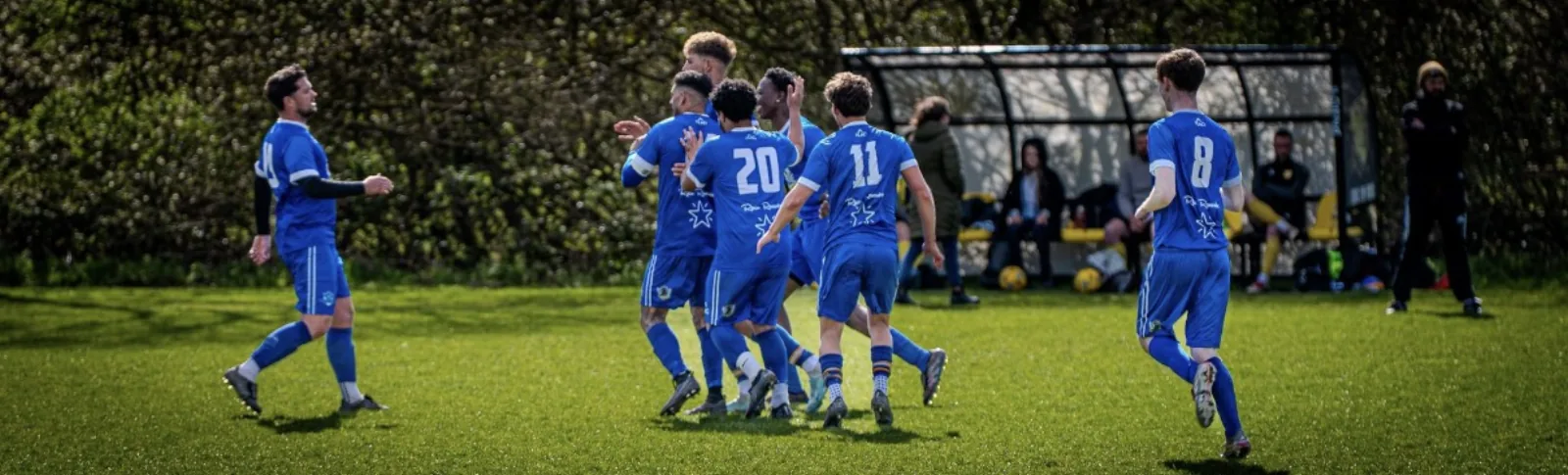
Almost everything written about buying football kit assumes a league. A fixed squad, a registered colour, a fixture list, a season with a start and an end. Plenty of teams don't have any of that and still need kit — and the advice changes more than you'd expect. Snakes United are a good example, because they've built something that works precisely by not being a league side.
Snakes United
Nottingham. It started in 2019 as a casual seven-a-side kickabout between mates, which is how most things start and where most things stop. In October 2024 they played their first eleven-a-side match as a proper charity team, and at the time of writing they've raised just under £6,900.
The model is a monthly fixture against other charity or casual sides, with a rotating cause: players nominate charities that mean something to them, and each cycle of matches goes to a nominated one. Their own line for it is hard to improve on — come down, have a laugh, raise money and awareness for good causes.
The bit worth noticing is who it's built for. Their pitch is explicitly aimed at people who can't commit to a weekly league season: shift workers, new parents, anyone whose Saturdays aren't reliably their own. That's a large group of people who want to play football and are quietly locked out of the normal route into it.
The problem nobody warns you about
A league club orders kit once for a known squad. Twenty players, registered, mostly the same twenty in March as in September. You size them, you number them, you're done.
A charity side has a roster, not a squad. Twenty-two turn out in April, eighteen in June, and eleven of those eighteen weren't in the April group. There is no registration to force a headcount and no season to bound it. If you order like a league club, you'll be wrong within two fixtures — and the specific way you'll be wrong is that you'll have four shirts nobody can wear and three players in their own gear.
Order the size spread, not the squad
The single most useful change: stop ordering for named individuals and start ordering a distribution.
For a league squad you'd size every player against the chart and order exactly that. For a rotating roster you want a spread that covers whoever walks up — which in practice means weighting the middle heavily and carrying the tails. Something like two smalls, four mediums, six larges, five XLs, three 2XLs and two 3XLs covers a far wider set of turnouts than twenty-two shirts cut to the people who happened to play last month.
Order a handful of spares while you're at it. An extra shirt costs very little at the point of order and a great deal afterwards, because a top-up run of two shirts carries the same setup as a run of twenty. If you're going to be wrong, be wrong in the direction of having too many.
Numbers yes, names no
Put numbers on. They cost nothing extra with sublimation, they make the team look like a team, and a number is assignable to whoever is wearing the shirt this month.
Don't put names on. A named shirt belongs to one person, and the moment that person stops turning up it's a rag. For a side whose whole model is people dipping in and out, names quietly convert your kit into a pile of single-use garments. This is the opposite of the advice we'd give a league club, and it's the clearest example of how different the two jobs are.
Don't print the cause on the shirt
This one comes up every time and the instinct is always the same: we're raising money for a charity, let's put the charity on the shirt.
Resist it. If your causes rotate, a charity logo dates your kit to one cycle. Six months later you're playing for a different cause in shirts advertising the last one, and you either live with it or buy kit again. Put the club's own identity on the shirt — crest, colours, sponsor if you have one — and let the cause live where it can change for free: the matchday graphic, the fundraising page, the socials, a captain's armband if you want something physical.
The shirt is the constant. The cause is the variable. Print the constant.
The shirt is a fundraising tool
A charity side has one advantage over a Sunday league team when it goes looking for a sponsor, and it's a big one: you're offering a local business a association with money going to good causes, rather than an association with a team that finished eleventh.
Use it. The same approaches that work for league clubs work better here — the detail is in who actually pays for a grassroots kit — but the conversation is easier and the yield tends to be higher. A sponsor covering the kit outright is a realistic ask when every pound you'd have spent on shirts goes to the cause instead. Say that part out loud when you ask.
What it costs
Shirt, shorts and socks with numbers is £30 a player, so a twenty-two shirt spread with a few spares lands around £750. That's the whole thing rather than a deposit, and we keep the artwork on file, so when the roster grows a top-up is a short email rather than a new project.
If you're setting something like this up in Nottingham, we're twenty minutes away — there's a Nottingham page with the local detail, or run your numbers through the configurator and see where it lands.